


Precision CNC Turning Services: Custom Cylindrical Parts with Superior Accuracy

When your project demands precise rotational symmetry, exceptional concentricity, and a flawless surface finish on cylindrical components, our Precision CNC Turning Services deliver. At Goldconn, we use advanced CNC lathes, including multi-axis turning centers with live tooling, to transform metal and plastic bar stock into highly accurate custom parts. From intricate shafts and pins to complex fittings and bushings, we ensure your components meet exact specifications for both prototyping and high-volume production.

What is CNC Turning?

CNC turning is a subtractive manufacturing process that creates cylindrical parts by rotating a workpiece against a stationary cutting tool. Unlike CNC milling, where the tool rotates around a stationary workpiece, in turning, the material itself spins on a lathe, while a cutting tool moves along its axis to remove material and shape the part.

This method is ideal for producing components with rotational symmetry, such as shafts, pins, bushings, and custom fittings. The process is fully automated by Computer Numerical Control (CNC) software, ensuring high precision, excellent surface finishes, and consistent repeatability across large production runs.

Goldconn's Advanced CNC Turning Capabilities

At Goldconn, we’ve invested in a robust fleet of modern CNC lathes to ensure we can meet your project’s demands for precision, efficiency, and complexity. Our shop is equipped to handle a wide range of turning requirements, from straightforward cylindrical components to intricate parts with multiple features.

Here's a look at what our advanced turning centers can do:

Multi-Axis CNC Lathes with Live Tooling

Our core strength lies in multi-axis CNC turning centers equipped with live tooling. This advanced capability allows us to perform secondary operations like drilling, milling, tapping, and cro
ss-drilling directly on the lathe, all in a single setup. This means we can create highly complex parts faster, with reduced setup times and improved accuracy by eliminating the need for re-fixturing on a separate milling machine.

Comprehensive Turning Operations

We regularly execute a full spectrum of turning operations including precise OD/ID turning, facing, boring, threading (internal and external), knurling for textured grips, grooving, parting, reaming, and tapering.

Part Size Range

Our diverse machine park can handle a significant range of part sizes. We typically machine parts with diameters from 5mm / 0.2 inches up to 300mm / 12 inches, with corresponding lengths. (Please provide Goldconn's actual ranges here for accuracy).

Achievable Tolerances

We consistently hold tight dimensional tolerances on our turned parts, typically reaching ±0.01mm (±0.0004 inches) for critical features. We prioritize concentricity and roundness, which are essential for optimal performance of rotating components.

Goldconn Type-C Connector Core Features and Benefits

Aluminum Alloys (e.g., 6061, 7075): Lightweight, highly machinable, good strength-to-weight ratio, and corrosion resistant. Popular for aerospace, automotive, and electronic parts.

POM (Acetal / Delrin): High stiffness, low friction, excellent dimensional stability, and good wear resistance. Ideal for gears, bearings, and mechanical parts.

Nylon (PA): Strong, durable, and wear-resistant. Often used for bushings, washers, and high-strength components.

PEEK (Polyether Ether Ketone): High-performance thermoplastic with excellent strength, chemical resistance, and high-temperature capabilities. Suitable for demanding aerospace and medical applications.

PTFE (Teflon): Extremely low friction and high chemical/temperature resistance. Commonly used for seals, gaskets, and chemical processing components.

ABS (Acrylonitrile Butadiene Styrene): Good impact resistance and toughness. Frequently used for housings, prototypes, and consumer product components.

Polycarbonate (PC): Known for toughness, impact resistance, and optical clarity. Used for lenses, safety guards, and durable enclosures.

HDPE (High-Density Polyethylene): Durable, flexible, and chemically resistant. Used in fluid systems and general-purpose components.


Integrated Finishing & Post-Processing for Your Turned Components

Beyond precise machining, Goldconn offers a comprehensive suite of integrated finishing and post-processing services for your turned parts. These value-added services ensure your components are ready for immediate use, enhancing their durability, aesthetics, and functionality while streamlining your supply chain.

Our common finishing and post-processing options for turned parts include:

These integrated services mean we can deliver complete, finished components, simplifying your project management and ensuring consistent quality from start to finish.

Your Project's Journey: The Goldconn CNC Turning Process

At Goldconn, every CNC turning project follows a clear, systematic process, ensuring precision and efficiency from concept to delivery. Our disciplined approach guarantees your custom cylindrical components meet stringent quality standards.Here’s how we bring your turned parts to life:

Design Review & DFM for Turning

We start with a thorough review of your 3D CAD models and technical drawings. Our experienced engineers provide essential Design for Manufacturability (DFM) feedback, specifically optimizing your part's design for efficient rotational machining. This upfront collaboration helps streamline production and control costs.
Material Selection & Bar Stock Preparation

Once the design is approved, we meticulously select and source the ideal metal or plastic bar stock from trusted suppliers. Materials are then precisely prepared and cut to length, ready for the turning process.
CNC Programming & Lathe Setup

Our skilled programmers translate your CAD design into precise G-code using advanced CAM software, defining every tool path, feed rate, and spindle speed for the lathe. Simultaneously, the appropriate cutting tools are selected and loaded, and the workpiece is securely fixtured in the lathe's chuck.
Precision Turning

The CNC lathe executes the programmed operations, rotating the workpiece while cutting tools precisely remove material. For complex parts, our multi-axis turning centers with live tooling allow us to perform multiple operations—like drilling and milling—in a single setup, maintaining accuracy and efficiency.

.In-Process & Final Quality Inspection

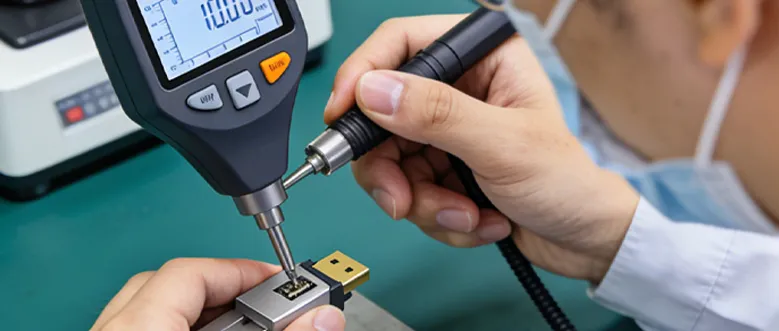
Quality control is paramount. We conduct continuous in-process checks using calibrated instruments. Every finished part undergoes rigorous final inspection, including checks for critical dimensions, concentricity, and surface finish, often using sophisticated equipment like CMMs.

Integrated Finishing & Post-Processing

After machining and initial inspection, components move to the specified finishing and post-processing steps. This can include polishing, anodizing, plating, or heat treatment, enhancing the part's performance, appearance, or durability.

Assembly (if applicable) & Delivery

For projects requiring it, we perform light assembly of turned components. Finally, parts are thoroughly cleaned, carefully packaged to ensure safe transit, and prepared for timely delivery to your location, complete with all necessary documentation.

Uncompromising Quality: Goldconn's CNC Turning Assurance

At Goldconn, ensuring the uncompromising quality of your CNC turned parts is our top priority. Our stringent quality assurance framework is built directly into every stage of the manufacturing process, guaranteeing your components meet exact specifications and perform flawlessly.

Our commitment to quality for turned parts includes:

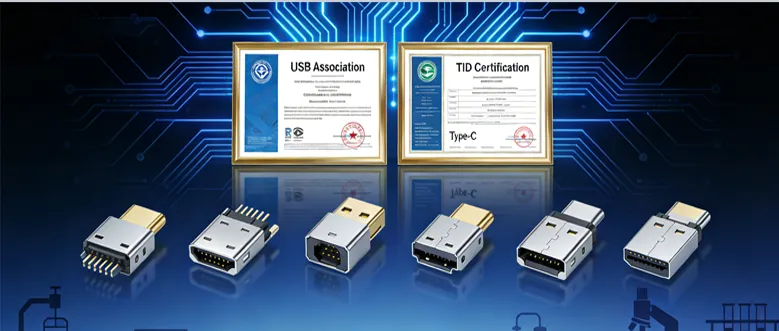
· ISO 9001

· IATF 16949

· ISO 14001

· ISO 45001 · RoHS Compliance (where applicable)

Why Choose Goldconn for CNC Turning?

Choosing the right partner for your CNC turning projects is crucial. At Goldconn, we combine advanced capabilities with deep expertise to ensure your cylindrical components meet the highest standards. Here’s why we’re a strategic partner for your turning needs:

CNC Turning FAQs

CNC turning is primarily used to create cylindrical or round parts by rotating a workpiece against a stationary cutting tool. It's ideal for manufacturing components like shafts, pins, bushings, fasteners, and fittings with high precision, excellent surface finishes, and specific concentricity requirements.

The key difference lies in how material is removed. In CNC turning, the workpiece rotates rapidly while the cutting tool remains stationary or moves linearly. In CNC milling, the cutting tool rotates, while the workpiece typically remains stationary or moves linearly in multiple axes. Turning creates parts with rotational symmetry, while milling produces more prismatic or complex 3D shapes.

Live tooling allows our CNC turning centers to perform secondary operations like drilling, milling, and tapping directly on the lathe, without needing to transfer the part to a separate milling machine. This significantly reduces setup times, improves overall part accuracy by eliminating re-fixturing errors, and allows for more complex features on a single cylindrical component.

CNC turning excels at manufacturing parts with rotational symmetry. This includes, but isn't limited to, shafts, pins, bolts, nuts, bushings, spacers, fittings, couplings, medical implants, and motor components. Any part that is predominantly round is a good candidate for turning.

We turn a wide range of both metals and plastics. Common metals include various grades of Aluminum (e.g., 6061, 7075), Stainless Steel (e.g., 303, 304, 316), Brass, Carbon Steel, Copper, and Titanium. For plastics, we frequently machine POM (Delrin), Nylon, PEEK, PTFE (Teflon), ABS, and Polycarbonate.

We consistently hold tight dimensional tolerances on our CNC turned parts, typically reaching ±0.01mm (±0.0004 inches) for critical features. We also prioritize excellent roundness and concentricity, which are crucial for the performance of rotational components. Specific achievable tolerances may vary based on material and part geometry.

We prefer 3D CAD models in industry-standard neutral formats such as STEP (.stp) and IGES (.iges) for precise data transfer. We also accept native CAD files from common software like SolidWorks (.sldprt). It's crucial to accompany 3D models with 2D technical drawings, preferably in PDF format, detailing all critical dimensions, tolerances, and surface finish requirements. We generally do not recommend STL files for CNC machining as they are mesh-based and lack the necessary precise geometric data.

Contact Goldconn for Your CNC Turning Project

Ready to get started on your custom CNC turned parts? We’re here to help.

Send us your 3D models and technical drawings for a detailed and precise quote. Our engineering team is ready to review your specifications and provide expert feedback.

Get A Quick Quote