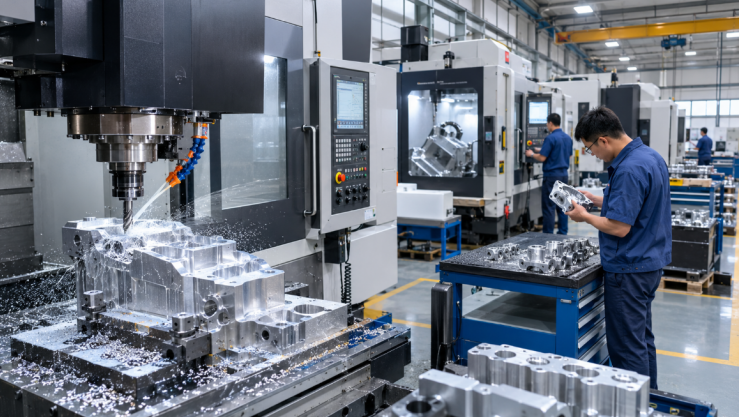
A procurement team qualifying a liquid cold plate manufacturer for a new high-power-density thermal program shortlists three supplier websites that all claim in-house tooling, full inspection, and complete process control, but initial email exchanges reveal conflicting answers about where machining and brazing actually take place. Assembling a reliable supply chain requires looking past polished marketing claims to evaluate verifiable factory assets.
Qualifying an OEM manufacturing partner for a major thermal program demands a structured evaluation framework. This procurement scorecard helps sourcing managers and supplier quality engineers separate true production facilities from trading brokers during initial shortlisting.

Table of Contents
- When Three Shortlisted Suppliers Look Identical on Paper
- Build a Supplier Scorecard Before the Site Visit
- In-House Process Breadth Versus Brokered Production
- Engineering, Simulation and DFM Support to Verify
- Quality System and Inspection Evidence to Request
- Capacity, Redundancy and Change Control
- Conclusion
1. When Three Shortlisted Suppliers Look Identical on Paper
When sourcing teams review multiple vendor profiles for a new thermal program, every supplier website makes the same three promises:
- Professional renderings of complex thermal assemblies
- Standard quality certifications
- Competitive commercial terms
However, when procurement managers request unedited shop-floor video tours or live machine capacity schedules, superficial marketing layers peel away quickly.
Relying on digital brochures without a rigorous evaluation rubric exposes programs to subcontracting risks, unexpected quality drift, and delayed prototype deliveries. Buyers need an objective scoring system that weighs tangible manufacturing infrastructure over sales promises. Reviewing established liquid-to-chip cooling solutions helps establish baseline expectations for what an integrated production partner should provide.
Establish a structured evaluation matrix before initiating contact with prospective vendors to maintain strict objectivity during the shortlisting phase.
2. Build a Supplier Scorecard Before the Site Visit
A standardized supplier scorecard replaces subjective impressions with measurable criteria, allowing sourcing committees to rank competing manufacturing candidates on equal footing. Instead of grading suppliers on general reputation, award points for:
- Verified factory ownership
- In-house equipment counts
- Traceable quality records
Scoring categories should examine machine bed sizes, coordinate measuring machine availability, and direct engineering support responsiveness. When pairing your evaluation criteria with project requirements, reviewing guides on custom versus standard plate selection helps clarify what specialized manufacturing capabilities your program demands.
Use the weighted scorecard framework below to evaluate shortlisted suppliers during your initial qualification review:
| Evaluation Capability | Evidence to Request from Supplier | What a Weak Supplier Answer Looks Like |
|---|---|---|
| In-House CNC Machining | Machine list showing brand-name vertical and horizontal centers | Claims long-term partnerships with local machine shops instead of direct ownership |
| Joining and Brazing Control | Furnace and friction stir welding equipment specifications | Relies on third-party job shops for vacuum brazing and structural sealing |
| Serialized Quality Inspection | Sample coordinate measuring machine report and automated test logs | Offers visual inspection summaries or lot-sampled manual checks only |
| Engineering and DFM Support | Internal thermal simulation case studies and CAD review protocols | Forwards drawings overseas without conducting internal manufacturability checks |
| Traceability and Change Control | Standard operating procedure for engineering change notifications | Implements drawing modifications without notifying the customer engineering team |
Incorporate this weighted scorecard into your vendor selection meetings to drive fact-based purchasing decisions.
3. In-House Process Breadth Versus Brokered Production
A major vulnerability in global sourcing is partnering with an intermediary trading company that outsources three steps to unverified sub-tier job shops:
- CNC milling
- Surface finishing
- Leak testing
When production issues arise, brokers struggle to control process parameters or enforce strict delivery schedules across fragmented subcontractors.
A qualified manufacturing partner centralizes five core operations under one roof, within controlled factory boundaries:
- Raw material staging
- High-speed CNC milling
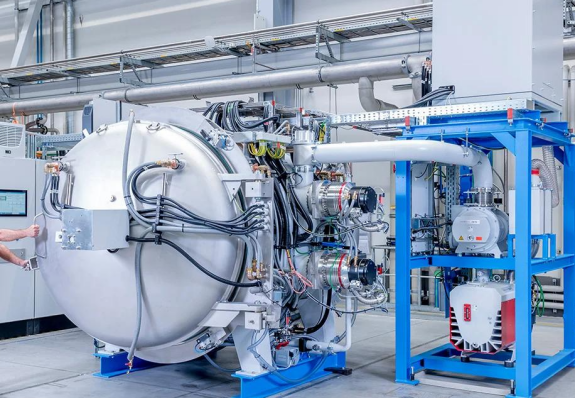
- Friction stir welding or vacuum brazing
- Surface treatments
- Final testing
Exploring foundational company background details via our corporate overview page highlights how integrated operational scale protects production timelines.
Demand a facility layout diagram that clearly maps where each manufacturing step takes place within the supplier’s audited plant footprint.
4. Engineering, Simulation and DFM Support to Verify
Sourcing managers frequently assume that engineering support means a supplier can read a CAD file, but a true manufacturing partner provides active design for manufacturability feedback that optimizes thermal performance and lowers fabrication costs. Before cutting metal, a candidate should be able to:
- Run CFD thermal simulations
- Evaluate channel pressure drop
- Suggest drawing adjustments
During technical interviews, ask engineering leads to walk through a past project where their design feedback resolved a customer thermal bottleneck or eliminated an unnecessary machining tolerance. Combining this technical dialogue with structured incoming acceptance inspection criteria ensures your engineering team and supplier share identical quality standards.
Require prospective vendors to present a DFM review sample from a previous client project during your technical audit.

5. Quality System and Inspection Evidence to Request
Quality assurances printed in a sales deck hold little value if the factory floor lacks the physical metrology equipment required to verify tight manufacturing tolerances. When shortlisting manufacturing partners, quality engineers must examine raw calibration logs, coordinate measuring machine capabilities, and automated test rig setups.
Insist on reviewing unedited sample inspection reports that demonstrate how the factory verifies active surface flatness and hermetic sealing. A capable vendor will readily provide data export examples from 100 percent pressure decay or helium mass spectrometry leak testing linked to individual serial numbers, proving their capability to meet project-specific reliability targets.
Request unredacted first article inspection packages from recent customer programs to verify inspection depth and reporting clarity.
6. Capacity, Redundancy and Change Control
Securing a supplier with strong prototype capabilities does not by itself show that the factory can absorb serial production volume without equipment bottlenecks. Procurement managers can review machine counts, floor space utilization and shift structures to judge whether the factory absorbs volume surges without losing delivery reliability.
Furthermore, investigate the supplier’s engineering change order workflow to ensure that any future drawing revisions trigger formal notification, simulation review, and delta first article approval before production lines adopt the change. You can review our integrated manufacturing infrastructure directly through our contact page.
Include manufacturing capacity audits and formal change-control protocol reviews as mandatory steps in your final supplier selection milestone.
7. Conclusion
Shortlisting a dependable liquid cold plate manufacturer requires moving past digital marketing claims to evaluate verified factory assets, in-house process control, and rigorous quality inspection evidence. Applying a structured scorecard transforms first-time sourcing from a subjective gamble into a controlled, fact-based engineering partnership.
Request a comprehensive factory audit, sample inspection records, and a change notification template before awarding your next thermal program by reaching out to Goldconn through our contact page for a free DFM review and a 24-hour quote.
Frequently Asked Questions
How can an overseas OEM buyer verify whether a shortlisted supplier is a direct factory or a trading broker?
Buyers can verify factory ownership by requesting unedited video walkthroughs of the production floor, checking equipment asset lists against facility square footage, and verifying that financial wire instructions match the audited manufacturing entity rather than a third-party trading company.
What metrology equipment is essential when auditing a precision thermal manufacturer?
An auditor should look for automated coordinate measuring machines to verify surface flatness, dedicated pressure decay and helium mass spectrometry leak testing rigs, optical comparators, and calibrated thread gauges to ensure complete dimensional and hermetic verification.
Why is formal engineering change control critical when managing a long-term liquid cooling program?
Without strict change control protocols, suppliers might alter CNC tool paths, deburring methods, or sub-tier plating sources to save time, inadvertently introducing dimensional drift or corrosion risks into your production assemblies.
What distinguishes a first-time supplier qualification audit from a routine quality review?
A qualification audit examines deep systemic capabilities, including raw material inventory controls, machine maintenance logs, calibration records, and financial stability, whereas routine reviews focus primarily on active lot performance and recent defect corrective actions.
How many suppliers should a procurement team typically shortlist before conducting on-site audits?
Sourcing teams generally narrow their initial market scan down to three vetted candidates based on scorecard metrics, allowing them to conduct thorough virtual or on-site technical audits without straining internal engineering resources.