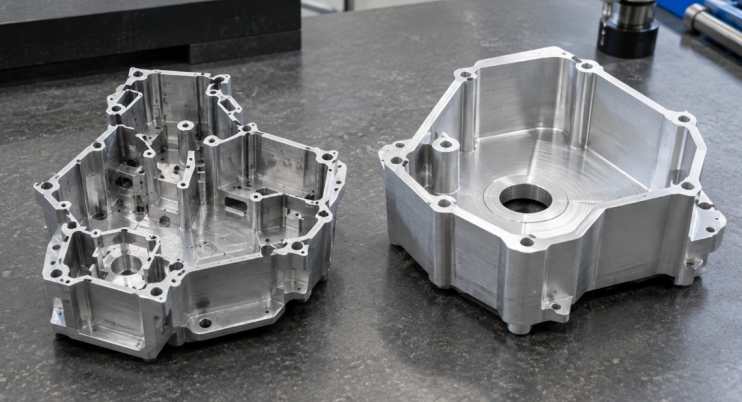
A connector drawing approved in CAD is only the beginning. Stable volume production depends on coplanarity control, reflow compatibility, automated inspection, and a supplier that can sustain the program for years. This article explains the manufacturing factors that separate a reliable Type-C connector from a liability, using first-hand process and certification data from the Goldconn USB Type-C connector product page.
Table of Contents
- 1. Materials and Plating Control Reliability
- 2. Coplanarity, SMT Yield, and Automated Inspection
- 3. THR, Shell Staking, and Laser Welding
- 4. IP Sealing and Environmental Validation
- 5. Reliability Testing and Certifications
- 6. Supplier Qualification Checklist
- 7. DFM, Samples, and Production Ramp
- Conclusion
- Request a Supplier Qualification Package
- Frequently Asked Questions
1. Materials and Plating Control Reliability
The mechanical shell of a USB-C connector is only the visible layer. Underneath it, the terminal alloy, plating thickness, and housing polymer determine contact resistance, wear life, and reflow stability. Goldconn specifies C7025 high-conductivity copper alloy terminals with 30 µ” localized gold plating over nickel, a stainless-steel shell, and LCP housing. Each of these choices solves a specific manufacturing or field problem.
| Component | Material | Function | Risk of Substitution |
|---|---|---|---|
| Terminals | C7025 copper alloy | Conductivity + spring force | Higher contact resistance, fatigue, and temperature rise |
| Contact plating | 30 µ” localized gold over nickel | Low resistance, corrosion resistance | Plating wear-through, oxidation, intermittent contact |
| Shell | Stainless steel | EMI shielding, insertion durability | Deformation, poor shielding, shorter wear life |
| Housing | LCP high-temperature polymer | Reflow stability and dimensional accuracy | Warping, coplanarity loss, shorts |
What Buyers Should Lock in the BOM
- Terminal alloy grade and tensile strength.
- Gold plating thickness and whether it is localized or full-surface.
- Nickel underlayer thickness for barrier protection.
- Housing polymer grade and glass-fill percentage.
- Shell material and plating (if any).
2. Coplanarity, SMT Yield, and Automated Inspection
USB-C terminals are micro-pitch and must sit in the same plane to solder evenly during reflow. Goldconn holds pin coplanarity strictly under 0.08 mm using 3D CCD vision systems. This is a meaningful number: poor coplanarity is one of the leading causes of open solder joints, solder bridges, and first-pass yield loss in connector assembly.
Inspection Checklist
- Request Cpk data for pin coplanarity (target Cpk ≥ 1.67).
- Confirm 100% automated 3D CCD inspection is performed in production, not sampling.
- Ask for measurement data before and after reflow to confirm zero thermal deformation.
- Verify inspection covers all terminals, not just a subset.
3. THR, Shell Staking, and Laser Welding
Mechanical retention is the difference between a connector that survives 10,000 cycles and one that lifts pads after a few hundred. Goldconn uses a 6-leg THR (Through-Hole Reflow) design combined with 360° laser seamless welding, reporting a 40% increase in torque resistance and elimination of pad peeling during frequent plug-ins.
| Feature | Purpose | Manufacturing Requirement |
|---|---|---|
| 6-leg THR | Transfers insertion and pull forces into the PCB via through-hole barrels | Precise lead forming and PCB hole-size control |
| Shell staking | Mechanically locks shell halves before welding | Consistent staking force and geometry |
| 360° laser welding | Creates a continuous, low-impedance shell seam for shielding and stiffness | Laser power and feed-rate control; post-weld inspection |
How to Validate Retention
Request insertion/extraction force curves, torque-to-failure data, and cross-section photos of solder joints after accelerated life testing. A supplier that cannot show measured retention force and failure mode is unlikely to deliver consistent mechanical performance.
4. IP Sealing and Environmental Validation
Goldconn provides IPX4 splashproof and IPX8 submersible connectors using LSR internal sealing and perimeter gaskets. From a manufacturing standpoint, the critical point is that sealing is not a connector-only property. The final IP rating depends on how the connector mates with the plug, how the cable gland seals, and how the enclosure is designed.
- Molded gasket geometry must remain consistent across cavitation to avoid leak paths.
- LSR curing parameters control compression set; under-cured seals relax and lose IP performance over temperature cycles.
- Assembly torque during shell staking can distort gasket geometry if not controlled.
- System validation should test the connector, cable, and enclosure together, not just the connector in isolation.
5. Reliability Testing and Certifications
Goldconn states it conducts high- and low-temperature cycling, salt spray, insertion/extraction force, durability, and EMI/EMC testing. It also holds ISO9001, ISO14001, IATF16949, and USB-IF TID certification. These certifications are not interchangeable; each addresses a different risk.
| Certification / Test | What It Proves | Buyer Question |
|---|---|---|
| ISO9001 | Quality management system exists and is audited | Is connector manufacturing in scope? |
| IATF16949 | Automotive-grade process discipline and traceability | Are automotive connector lines covered? |
| USB-IF TID | Compliance with USB electrical and mechanical standards | Is the exact model listed on the USB-IF integrator list? |
| Salt spray | Corrosion resistance of plating and shell | What duration and acceptance criteria? |
| Insertion/extraction life | Mechanical durability under cycling | What force limits define pass/fail? |
| Temperature cycling | Seal and solder-joint integrity across thermal swings | What temperature range and cycle count? |
| EMI/EMC | Shielding effectiveness for high-speed data | At what frequencies and test setup? |
6. Supplier Qualification Checklist
Beyond certifications, the right supplier delivers consistent process control and supply continuity. Goldconn is a Beijing Stock Exchange-listed manufacturer (Stock Code 8383337) offering an 8-year longevity program. Use the checklist below when auditing any Type-C connector supplier.
- Process capability—Cpk for coplanarity, plating thickness, and insertion force.
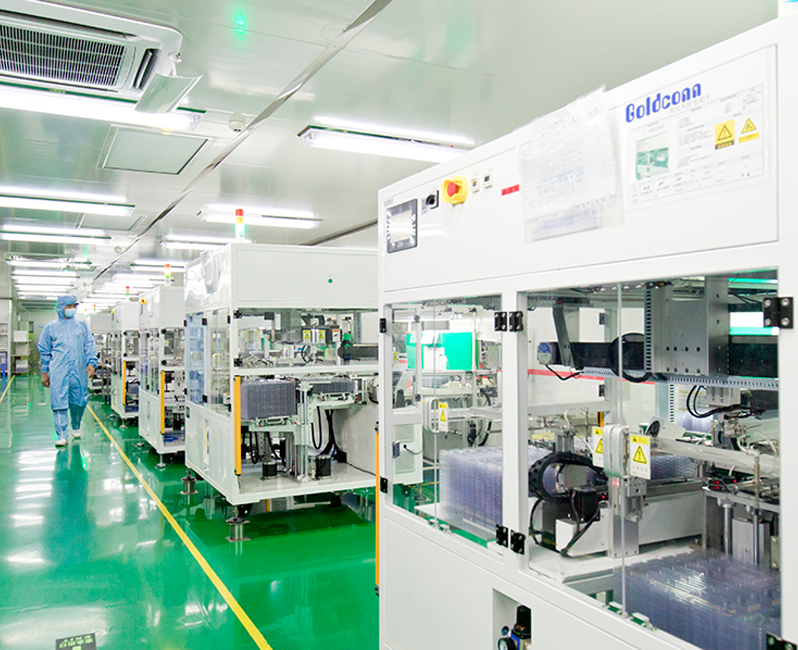
- Automation level—percentage of assembly and inspection performed on automated lines.
- Traceability—lot tracking from raw material through plating, molding, assembly, and test.
- Tooling ownership—who owns the mold and stamping dies, and what is the change-control process?
- Longevity policy—minimum supply commitment and PCN (Product Change Notification) lead time.
- Second-source strategy—whether an alternative qualified source exists for critical programs.
- Logistics flexibility—DHL/UPS/FedEx, FOB, DAP, and customs documentation support.
7. DFM, Samples, and Production Ramp
Goldconn’s described workflow includes customer consultation, technical solution design, DFM review, sample production, customer testing, mass production, and global logistics. The DFM step is where manufacturing risk is caught early. Buyers should treat the sample phase as a qualification gate, not a formality, and run the parts through their own reflow profile and environmental tests before releasing mass production.
Conclusion
USB Type-C connector reliability is built at the material, process, and inspection layers. C7025 terminals with 30 µ” localized gold plating, pin coplanarity under 0.08 mm, 6-leg THR mounting with laser-welded shells, and IP sealing are the manufacturing controls that separate qualified parts from catalog commodity parts. Pair these technical checks with a supplier audit covering ISO9001, IATF16949, TID listing, traceability, and longevity policy before committing the BOM. For the broader selection framework, see the USB Type-C connector procurement guide.
Request a Supplier Qualification Package
Send us your program requirements and we will provide a supplier qualification package including certification scope, coplanarity and inspection data, sample plan, and 8-year longevity terms. You can also review the full USB Type-C connector product range to identify the right starting model.
Frequently Asked Questions
What does 30 µ” localized gold plating mean?
It means the gold layer is approximately 30 microinches thick and applied only to the contact mating surface, not the entire terminal. This reduces cost while maintaining the low contact resistance and corrosion protection where it matters.
Why is pin coplanarity under 0.08 mm important?
Micro-pitch terminals that are not coplanar will not all contact the solder paste during reflow. The result is open joints or solder bridges, both of which lower first-pass yield and create latent field failures.
What is 6-leg THR mounting?
THR stands for Through-Hole Reflow. Six legs pass through plated holes in the PCB and are soldered during the same reflow process as surface-mount components. This anchors the connector mechanically and resists pad peeling under insertion and pull forces.
How does laser welding improve the connector shell?
360° laser welding creates a continuous seam around the shell, improving stiffness, EMI shielding continuity, and resistance to shell opening or deformation under torque. It is stronger and more consistent than press-fit or spot-welded shells.
What is the difference between IPX4 and IPX8?
IPX4 protects against splashing water from any direction. IPX8 protects against continuous immersion under conditions specified by the manufacturer. IPX8 is required for submersible or washdown applications; IPX4 is sufficient for occasional liquid exposure.
What is an 8-year longevity program?
It is a supply commitment to keep a specific connector model available for at least eight years, reducing the risk of unexpected End-of-Life redesigns for industrial, medical, and automotive customers.
What certifications should I request from a Type-C supplier?
Request ISO9001, IATF16949 if automotive, USB-IF TID for the specific model, and RoHS/REACH environmental compliance. Also ask for reliability test reports covering insertion life, salt spray, and temperature cycling.
How many free samples are typically available?
Goldconn offers up to 100 free male or female Type-C connector samples in tape-and-reel format for engineering validation and DFM review before mass production.