Choosing a custom metal fabrication supplier is one of the highest-leverage decisions in a hardware program. The right partner protects your margin, lead time, and field reliability; the wrong one ships late, documents poorly, and quietly pushes risk back onto your engineering team. This guide gives you a practical scorecard and the questions that separate a real one-stop manufacturer from a broker with a polished website. For the full process picture, start with our custom metal fabrication services guide.
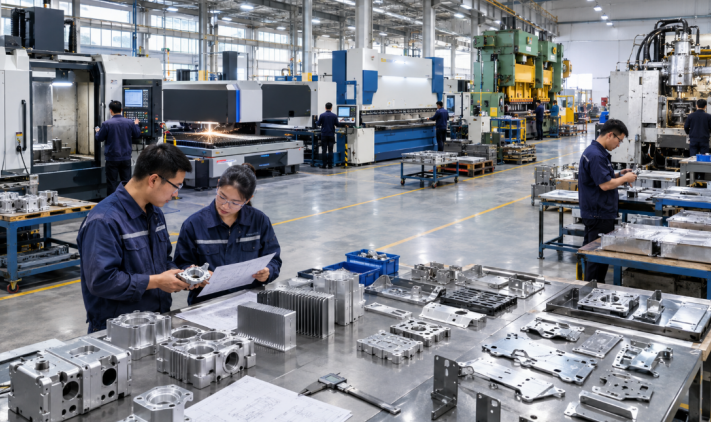
Table of Contents
- 1. Why Supplier Choice Drives Program Risk
- 2. Six Capabilities That Separate a Real Shop from a Broker
- 3. A Weighted Supplier Scorecard
- 4. Certifications You Actually Need by Industry
- 5. How to Read and Compare Quotes
- 6. Red Flags in RFQ Responses
- 7. Questions to Ask Before You Send Drawings
1. Why Supplier Choice Drives Program Risk
The quoted price is the most visible number, but it is rarely the largest cost. The real cost of a weak supplier shows up as rework, late tooling, missing inspection reports, and single-source fragility that stalls your whole production line. A manufacturing partner is effectively an extension of your engineering and quality teams, so the decision deserves the same rigor you give to a key component.
The biggest savings usually appear before any metal is cut. A supplier with strong design-for-manufacturability (DFM) discipline flags thin walls, tight tolerances, and draft-angle violations in your drawing and suggests fixes that lower cost without hurting function. Our top 10 DFM tips show the changes that matter most.
2. Six Capabilities That Separate a Real Shop from a Broker
A trading company can email you a quote the same day; a manufacturer can tell you why your part will crack. Judge suppliers on these six capabilities, not on how fast they reply.
2.1 In-House Process Breadth
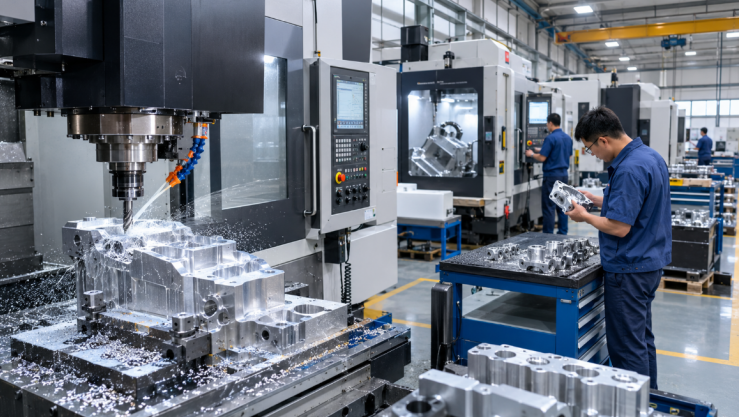
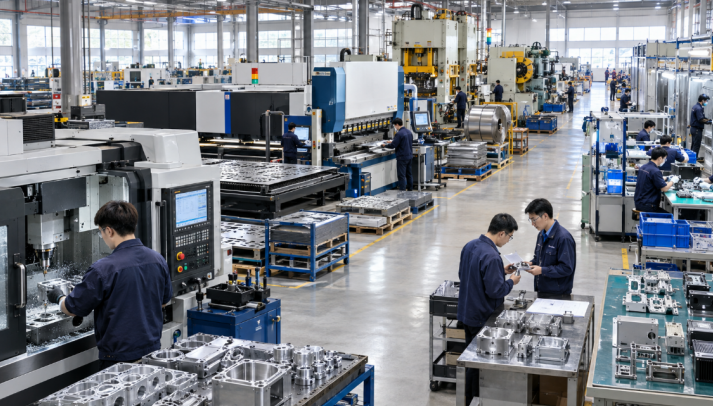
Ask what is actually done inside their building versus subcontracted. True one-stop shops run CNC, sheet metal, stamping, and die casting on their own floor, so they control lead time and quality end to end. If a supplier must outsource half the process, you inherit their vendor’s risk and markup. See the full range on our Metal Manufacturing Services page.
2.2 Engineering and DFM Depth
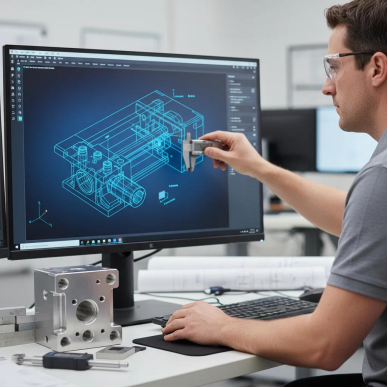
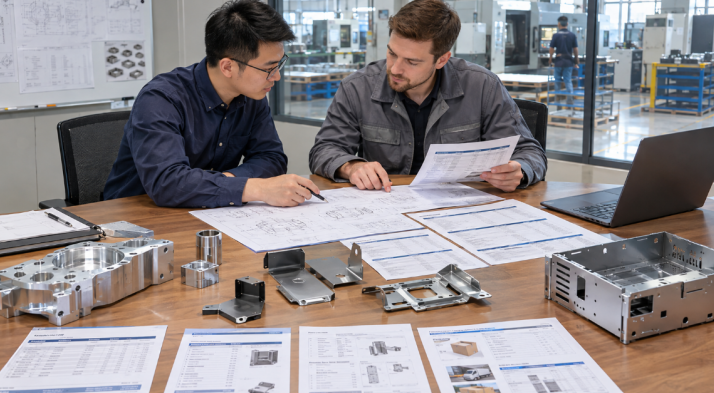
The highest-value service a fabricator offers is catching design problems before tooling is cut. Look for a supplier that returns a DFM report with the quote, not after you have paid for a die. The report should list each recommended change, the reason, and the cost impact so you can decide with real numbers.
2.3 Quality System and Documentation
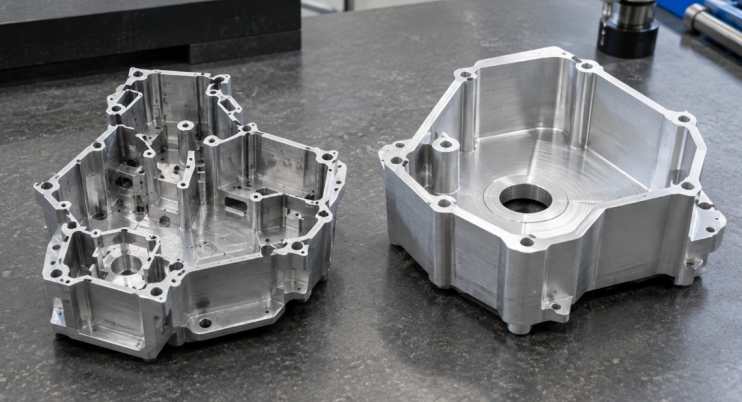
For qualified programs you need more than a certificate on the wall. Confirm the inspection toolkit: CMM (coordinate measuring machine) reports, first-article inspection (FAI), and PPAP packages for automotive. Material certificates and a documented corrective-action process let your own quality team approve the part without re-measuring everything.
2.4 Capacity and Redundancy
Capacity is not just machine count; it is whether they can absorb your volume spike without slipping every other customer. Ask about available spindle hours, shift pattern, and what happens if a key machine fails. Redundancy in machines and fixtures is what keeps your line running when something breaks.
2.5 Finishing and Assembly
Every hand-off between vendors adds freight, lead time, and a chance for parts to get lost or scratched. A supplier that anodizes, powders, plates, and sub-assembles in-house consolidates your supply chain and shortens the critical path to a finished assembly.
2.6 Program Management and Communication
A dedicated project manager who replies within a working day is worth more than a 2 percent price cut. Poor communication is the most common cause of late deliveries, because issues surface late instead of at the quote stage where they are cheap to fix.
3. A Weighted Supplier Scorecard
Turn the six capabilities into a score. Weight them by what matters for your program: automotive and medical buyers weight quality and certs highest; cost-sensitive consumer programs weight price and capacity. Score each supplier 1 to 5, then multiply by the weight.
| Capability | Weight | What a “5” looks like |
| Process breadth (in-house) | 15% | All core processes on own floor |
| DFM / engineering | 20% | DFM report with every quote |
| Quality & docs | 20% | CMM, FAI, PPAP, material certs |
| Capacity / redundancy | 15% | Spare machines, multi-shift |
| Finishing & assembly | 15% | Full in-house finishing + sub-assembly |
| PM / communication | 15% | Named PM, <1-day response |

4. Certifications You Actually Need by Industry
Do not pay for certificates you do not need, but do not skip the ones your industry requires. The table maps common sectors to the baseline you should insist on before releasing a purchase order.
| Industry | Baseline certs | Why it matters |
| Automotive | IATF 16949 + ISO 9001 | PPAP, traceability, controlled processes |
| Medical | ISO 9001, material traceability | Clean materials, documented controls |
| Industrial / IoT | ISO 9001 | Consistent quality at steady volume |
| Communications / EMI | ISO 9001, plating control | Shielded housings, RoHS plating |
| EV charging / power | IATF 16949 preferred | Thermal parts in outdoor heat cycles |
Beyond certificates, a Beijing Stock Exchange listed manufacturer with 20+ years of OEM/ODM experience signals stability you can plan around. Membership in standards bodies such as USB-IF and HDMI also shows a working commitment to specifications, not just a logo on the wall.
5. How to Read and Compare Quotes
Two quotes that look different in price often describe different scopes. Before you pick the cheap one, line up what each includes. Our custom metal fabrication cost guide breaks down each driver, but the items below are the ones buyers miss most.
5.1 Hidden Costs to Put on the Table
- Tooling / NRE: is the die or fixture price included, and who owns it?
- MOQ: a low unit price may hide a high minimum that ties up cash.
- Scrap and yield: tight tolerances raise scrap; confirm who absorbs it.
- Finishing: anodize, plating, and coating are often quoted separately.
- Freight and packaging: international shipping and export crates add up.
- Inspection: CMM or FAI reports may carry a per-lot fee.
Ask every supplier to quote the same scope – same finish, same packaging, same inspection level – so the comparison is real. The supplier who asks the most clarifying questions usually understands the part best.
6. Red Flags in RFQ Responses
- No DFM feedback at all – they will cut whatever you drew, including the costly mistakes.
- Vague lead times like “about 4 weeks” with no basis in volume or tooling.
- Certificate shown but no audit number and no PPAP/FAI process for automotive.
- No references and no sample policy – a confident supplier offers both.
- Price far below market with no explanation – usually a scope gap you pay for later.
- Pushes back on NDA – serious OEM suppliers sign one before you release drawings.
7. Questions to Ask Before You Send Drawings
Send these questions with your RFQ. The answers tell you more than the price line. For a complete scope of what a one-stop partner can take off your plate, see our Metal Manufacturing Services overview.
- Will you sign an NDA before I release sensitive files?
- Do you return a DFM report with the quote, and is it free?
- What is your sample / prototype policy and lead time?
- Which processes are in-house versus subcontracted?
- What quality documents do I get (FAI, PPAP, CMM, material certs)?
- Can you scale from pilot to volume without re-sourcing?
Frequently Asked Questions
What is a realistic minimum order quantity (MOQ)?
It depends on process and finish. Machining and laser cutting can start from a single prototype; stamping and die casting carry tooling that only pays back above a volume threshold. A flexible supplier supports pilot runs and scales up, so ask for the per-process MOQ rather than one number.
How do you protect my intellectual property and drawings?
A serious OEM supplier treats drawings as confidential by contract, restricts file access internally, and signs an NDA before you release sensitive files. Ask for the NDA up front; mature suppliers work under customer NDAs for automotive and medical programs as standard practice.
Do you charge for samples or prototypes?
Policy varies. Some suppliers offer free or low-cost prototypes to win a program; others charge at cost. What matters is that the prototype lead time and the path from prototype to production are clear before you commit, so you are not surprised by a long gap later.
Which certifications matter most for automotive parts?
IATF 16949 is the baseline for automotive, built on ISO 9001. It brings PPAP documentation, traceability, and controlled change management. If your tier-1 customer requires it, a supplier without IATF 16949 cannot qualify regardless of price.
How do I compare two quotes that look different?
Normalize the scope first: same finish, packaging, inspection level, and Incoterms. Then compare the unit price at your real annual volume, including tooling amortized across the program. The supplier who asked the most clarifying questions usually priced the part you actually need, not the one on the drawing.
Should I single-source or dual-source?
Dual-sourcing protects against disruption but splits volume and can raise unit cost. A common path is to qualify one primary supplier and keep a second on the approved list for critical parts. A one-stop shop with in-house redundancy can reduce the need for a second vendor by solving issues internally.
What quality documents should I receive?
For qualified programs expect material certificates, first-article inspection (FAI) reports, CMM dimensional reports, and PPAP packages for automotive. These let your quality team approve the part without re-measuring, and they are part of a mature IATF 16949 system.
How long from drawing to first article?
Prototype lead time is usually days to a couple of weeks after DFM sign-off; production lead time depends on volume, tooling, and finish. A DFM review early in the project is the surest way to shorten the clock, because it prevents late redesign loops that sink both schedule and margin.
Can one supplier do machining, sheet metal, and finishing together?
Yes, and it is preferable for mixed assemblies. A one-stop shop machines the structural parts, forms the sheet metal, and finishes everything in-house, so your enclosure and brackets are designed together instead of by vendors guessing at each other’s interfaces. That removes hand-offs, freight, and markup between shops.
What payment terms are normal in custom fabrication?
Common terms are tooling paid up front and parts on net-30 to net-60 after shipment, or a deposit plus balance against shipping documents. Tooling ownership should be stated in the contract so you can move it if the relationship ends.
Request a Quote
Ready to vet a fabrication partner on your next part? Send Goldconn your CAD file and requirements for a free DFM review and a transparent quote that lists tooling, finish, inspection, and freight separately – so you can compare it fairly against any other supplier. Start on our Custom Metal Components page, or review the full Metal Manufacturing Services scope first.