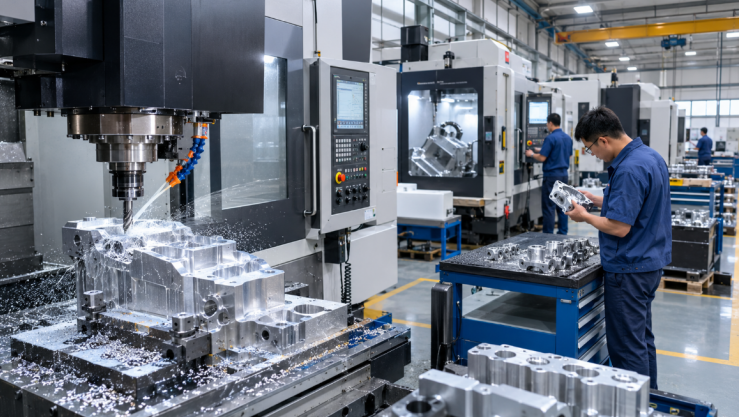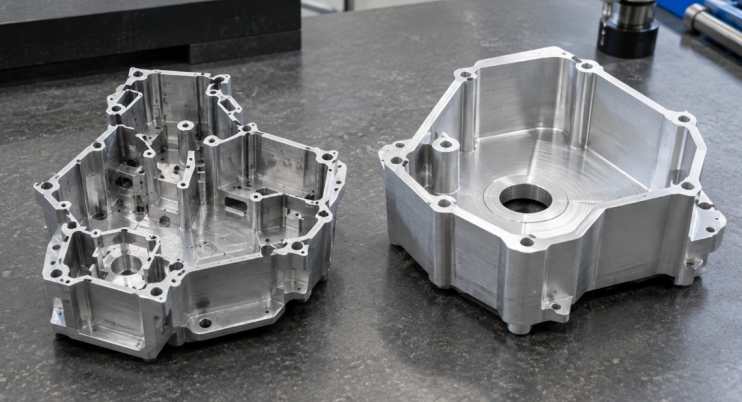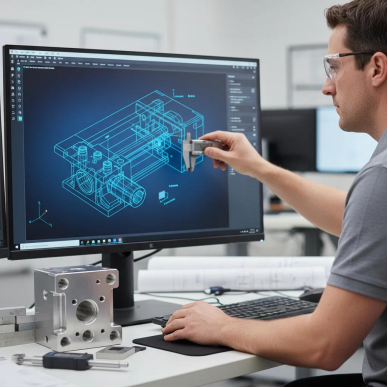
Custom metal fabrication turns raw sheet, bar, or billet metal into production parts built to your drawings. It spans CNC machining, sheet metal work, stamping, die casting, and thermal components. For an OEM, the fabrication partner you choose sets your unit cost, lead time, and field reliability. This guide walks through the main processes, how to pick the right one, what to look for in a supplier, and what the work really costs – so you can brief vendors with confidence and protect your margin. Goldconn runs all of these processes under one roof; see the full scope on our Metal Manufacturing Services page.
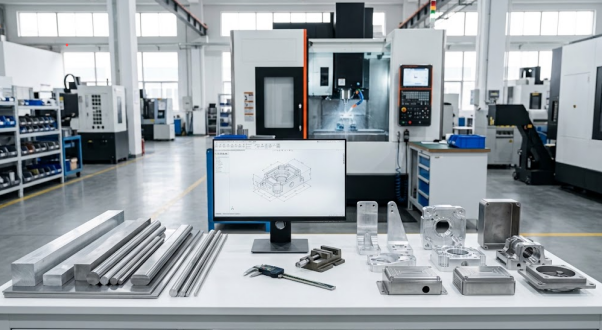
Table of Contents
- 1. What Is Custom Metal Fabrication?
- 2. Which Processes Does a One-Stop Shop Cover?
- 3. How to Choose the Right Fabrication Process
- 4. What to Look for in a Fabrication Supplier
- 5. How Much Does Custom Metal Fabrication Cost?
- 6. How Goldconn Supports OEMs from Prototype to Production
1. What Is Custom Metal Fabrication?
Custom metal fabrication means building parts to a customer’s specification instead of buying a standard catalog item. A fabrication shop takes your CAD file and turns it into a finished part through a chain of operations: design for manufacturability (DFM) review, cutting, forming, machining, joining, surface finishing, and often sub-assembly. The output can be a single prototype bracket or a million-piece automotive housing. What makes it “custom” is that every dimension, material, and finish is driven by your drawing rather than a vendor’s standard range.
The end-to-end workflow usually looks like this. First, the supplier reviews your drawing for manufacturability and flags changes that lower cost or risk. Next, raw material is cut to size – by laser, saw, or CNC. Then it is shaped by bending, stamping, or machining. Parts are joined by welding, riveting, or adhesive, finished by anodizing, plating, or coating, and finally inspected and assembled. A one-stop shop runs every step in-house, so you manage one partner instead of five.
1.1 Why OEMs Outsource Fabrication
OEMs exist to build and sell a finished product, not to run a machine shop. Outsourcing fabrication gives you scale, certified quality systems, and fast prototyping without capital spending on equipment. It also moves risk: your supplier owns process capability, capacity planning, and compliance. For a small team, a good fabrication partner is effectively an extension of your mechanical engineering department.
1.2 Common Metals and How They Behave
Metal choice drives cost, weight, strength, and how the part is made. The table below summarizes the materials most OEMs specify and where each fits best.
| Metal | Key traits | Typical use |
| Aluminum (6061, 6063, 7075) | Light, corrosion-resistant, easy to machine and anodize | Enclosures, brackets, heat sinks |
| Stainless steel (304, 316) | High strength, corrosion-resistant, harder to machine | Medical, food, outdoor, marine |
| Carbon steel (SPCC, S235) | Cheap, strong, needs coating to resist rust | Structures, stamping parts |
| Copper / brass | Excellent conductivity, higher cost | Electrical, thermal, connectors |
| Magnesium / zinc (die cast) | Very light / castable, thin walls | Housings, EMI shields |
| Titanium | High strength-to-weight, costly, slow to machine | Aerospace, medical implants |
1.3 What Tolerances Can You Expect?
Tolerance is the allowed deviation from your nominal dimension, and it strongly affects price. Looser tolerances are cheaper and faster; tighter ones need more setup, inspection, and scrap control. As a rule of thumb, CNC machining holds roughly plus/minus 0.01-0.05 mm, sheet metal bending about plus/minus 0.1-0.3 mm, stamping plus/minus 0.05-0.1 mm, and die casting plus/minus 0.1-0.3 mm depending on the feature. If your part does not need tight tolerances everywhere, opening them up is one of the fastest ways to cut cost. For a side-by-side of the two most-asked options, our CNC Machining vs Sheet Metal Fabrication guide breaks it down.
2. Which Processes Does a One-Stop Shop Cover?
A full-service metal fabricator typically offers five core processes. Knowing what each does – and where it breaks down on cost and volume – helps you brief suppliers and spot the right method for your part before you request quotes.
2.1 CNC Machining and Turning
CNC (computer numerical control) machining cuts solid metal with spinning tools to make precise shapes. It fits low-to-mid volume and complex geometry where tight tolerances matter. Goldconn runs 150+ CNC machines, including 3-, 4-, and 5-axis centers, for parts in steel, aluminum, stainless, copper, brass, titanium, and engineering plastics. See our CNC Machining & Turning capabilities for materials and size limits.
5-axis machining is the key advance for OEMs: it cuts complex surfaces in one setup, which improves accuracy and removes the fixturing steps that add cost and error. For prototypes and low-volume production runs, CNC is usually the fastest path from drawing to part.
2.2 Sheet Metal and Laser Cutting
Sheet metal fabrication starts from thin flat stock (typically 0.1-10 mm) and forms it by laser cutting, CNC punching, bending, and welding. It is the cost-effective choice for enclosures, brackets, and panels, especially when wall thickness is thin and volume is moderate. Our Laser Cutting Sheet Metal Fabrication page covers materials and thickness ranges.
Laser cutting gives clean edges with little burr, while CNC bending forms accurate angles. The main trade-off versus machining is that sheet metal parts are hollow and thin-walled – great for shells, less so for load-bearing solid blocks.
2.3 Metal Stamping and Hard Punching
Stamping uses a die and a press to shape metal in a single stroke. Once the tooling is paid for, each part is very cheap and fast, which makes stamping ideal for high-volume production. Explore our Hard Stamping Sheet Metal Fabrication process for typical materials and press tonnages.
The economics hinge on tooling cost spread over volume. A stamping die can cost thousands of dollars, so the process only pays off above a certain annual quantity. Below that threshold, laser cutting or CNC is cheaper because it needs no dedicated tool.
2.4 Die Casting
Die casting injects molten aluminum, zinc, or magnesium into a steel mold under high pressure. It produces complex, near-net-shape parts with good surface finish and tight tolerances at volume. Goldconn uses 80-2000T machines, making it suitable for everything from small EMI shields to large enclosures. Details are on our Die Casting page.
Two points matter for OEMs. First, die-cast parts need draft angles and uniform wall thickness so the part releases from the mold – your DFM review should catch violations early. Second, aluminum die casting can be porosity-prone under pressure; if your part holds a vacuum or coolant, specify vacuum-assisted casting or a secondary impregnation step.
2.5 Thermal Solutions
Many metal parts must also move heat. A fabricator with thermal know-how can supply extruded, skived-fin, soldered, heat-pipe, cold-forged heat sinks, and liquid cold plates. See our Thermal Heat Sink solutions for the full range. Cooling choice is increasingly a make-or-break decision for power electronics and EV charging, where heat decides reliability.
3. How to Choose the Right Fabrication Process
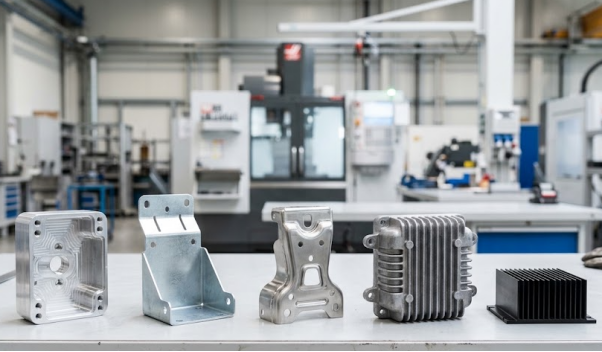
Process choice comes down to three variables: volume, geometry, and tolerance. The fastest rule is to use machining for low volume and complex solid shapes, sheet metal for thin-walled enclosures, and stamping or die casting for high volume. For a side-by-side on the two most-asked options, read our CNC Machining vs Sheet Metal Fabrication guide.
3.1 Quick Decision Table
| If your part is… | Best process | Why |
| Low volume, tight tolerance, complex solid shape | CNC machining | No tooling, fastest to first part |
| Thin enclosure or bracket, 0.1-10 mm | Sheet metal + laser cutting | Low cost per part, fast |
| High volume, simple shape, lowest unit cost | Stamping | Tooling amortized over volume |
| High volume, complex 3D shape, good finish | Die casting | Near-net shape, minimal machining |
| Must dissipate significant heat | Thermal / liquid cold plate | Designed for heat transfer |
3.2 Volume and the Cost Curve
The single biggest driver of process choice is annual volume. Below roughly 100-500 pieces, machining or laser cutting wins because there is no tooling to recover. Between a few hundred and tens of thousands, die casting or stamping start to win as tooling cost spreads across units. Above that, dedicated high-speed tooling and automation dominate. When tolerances and lead time also drive the decision, our Die Casting vs CNC Machining comparison breaks down the cost, tolerance, and delivery trade-offs with real numbers.
4. What to Look for in a Fabrication Supplier
A supplier is more than a machine list. The right partner reduces your risk on quality, delivery, and cost across the whole program life. Our How to Choose a Custom Metal Fabrication Supplier checklist covers the points buyers miss most, but the essentials are below.
4.1 Certifications and Track Record
For automotive and medical work, insist on IATF 16949 and ISO 9001 at minimum; ISO 14001 and ISO 45001 signal mature environmental and safety systems. Goldconn is certified to ISO 9001, ISO 14001, ISO 45001, QC 080000, and IATF 16949, and is a Beijing Stock Exchange listed company (code 8383337) with 20+ years of OEM/ODM experience. Membership in industry bodies such as USB-IF and HDMI also shows commitment to standards.
4.2 Engineering and DFM Support
The highest-value service a fabricator offers is catching design problems before tooling is cut. A strong DFM review will suggest changes – thin a wall, relax a tolerance, add a draft angle – that lower cost without hurting function. Ask whether your supplier returns DFM feedback with the quote, not after.
4.3 Quality System and Inspection
Confirm the inspection toolkit: CMM (coordinate measuring machine) reports, first-article inspection (FAI), and PPAP documentation for automotive programs. For medical and automotive parts, you should expect material certificates, full-dimensional reports, and a documented corrective-action process. These are what let your own quality team approve the part without re-measuring everything.
4.4 Value-Added Services and Consolidation
Also confirm finishing, sub-assembly, and supply-chain consolidation, so you are not juggling extra vendors. Goldconn lists these on the Custom Metal Components page – anodizing, powder coating, E-coating, and RoHS-compliant plating all done in-house.
5. How Much Does Custom Metal Fabrication Cost?
Cost is driven by material, process, tolerance, finish, tooling, and volume. The two biggest levers are design for manufacturability (DFM) and order quantity. Our Custom Metal Fabrication Cost article explains each driver and shows typical price ranges, but the short version is below.
5.1 The Main Cost Drivers
Material is priced by weight and grade – aluminum and steel are modest, titanium and specialty alloys are not. Process time is the next lever: every extra machining hour or welding pass adds cost, so simplifying geometry pays back directly. Tight tolerances and special finishes (anodize color matching, plating thickness) add inspection and scrap. Tooling is a one-time cost that only makes sense at volume; the die casting vs CNC comparison shows how tooling flips the economics at scale.
5.2 How to Lower the Price
The fastest savings come from early DFM review. A small change – opening a tolerance, thinning a wall, combining two parts into one – can cut machining time and scrap by a wide margin before any production starts. Consolidating processes with one supplier also removes handling, freight, and markup between vendors. Finally, locking a higher annual volume lets you move from machining to stamping or die casting, where per-part cost drops sharply.
6. How Goldconn Supports OEMs from Prototype to Production
Goldconn is a one-stop custom metal fabrication provider established in 2004. Across three China plants (about 58,000 m2) and 300+ machines, we take parts from DFM review and prototyping through mass production, finishing, and sub-assembly. We serve EV charging, medical, industrial IoT, and communications customers in 50+ countries.
6.1 Capacity at a Glance
- 150+ CNC machines (3-, 4-, 5-axis)
- Die casting 80-2000T (aluminum, zinc, magnesium)
- Laser cutting, CNC punching, hard stamping
- Extruded, skived-fin, soldered, heat-pipe, cold-forged heat sinks, liquid cold plates
- In-house finishing: anodizing, powder coating, E-coating, electroplating (RoHS compliant)
- Inspection: CMM, FAI, PPAP support
6.2 Industries We Serve
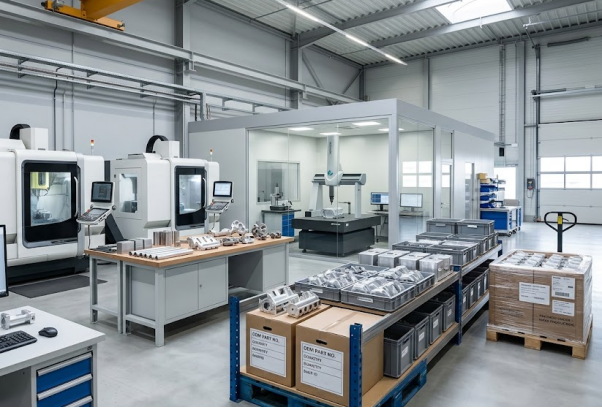
EV charging and power electronics need thermal parts that survive outdoor heat cycles. Medical devices need traceable, clean materials and tight tolerances. Industrial IoT needs small, reliable enclosures at steady volume. Communications gear needs EMI-shielded housings. In each case, the same fabrication toolkit is tuned to the application’s certification and reliability bar.
6.3 How to Start a Project
The path is simple: send your CAD file and requirements, get a DFM review and quote, approve a prototype, then scale to production. Goldconn supports flexible MOQs for pilot runs and scales to volume, so prototyping and low-volume batches are both workable. Learn more on the Custom Metal Components page.
Frequently Asked Questions
Is CNC machining or sheet metal fabrication better for my part?
Neither is “better” – they fit different parts. CNC machining suits solid, tight-tolerance, lower-volume parts. Sheet metal suits thin-walled enclosures and brackets where cost per part matters. For cooling parts specifically, compare options in our Liquid Cold Plate vs Heatsink guide.
What minimum order quantity (MOQ) can a fabricator accept?
It depends on process and finish. Goldconn supports flexible MOQs for pilot runs and scales to volume production, so prototyping and low-volume batches are both workable. For high-volume processes like stamping, the effective minimum is set by tooling payback rather than a hard count.
How long does a fabrication project take from drawing to production?
Prototype lead time is usually days to a couple of weeks after DFM sign-off; production lead time depends on volume, tooling, and finish. A DFM review early in the project is the surest way to shorten the clock, because it prevents late redesign loops.
What information do I need to send to get an accurate quote?
Send your CAD file, material, quantity, tolerance, and finish requirements. The more complete the package, the tighter the quote. A DFM review often reveals changes that lower cost before tooling is cut, so include any function or environment notes that matter.
Which metal should I choose for my part?
Start from function: aluminum for light and corrosion-resistant enclosures, stainless for medical and outdoor, steel for cheap structures, copper or aluminum for thermal and electrical, titanium where strength-to-weight is critical. The material table in section 1.2 is a quick reference; your supplier’s DFM review can confirm the choice against cost.
What tolerances can each process hold?
As a rule of thumb, CNC machining holds about plus/minus 0.01-0.05 mm, sheet metal bending plus/minus 0.1-0.3 mm, stamping plus/minus 0.05-0.1 mm, and die casting plus/minus 0.1-0.3 mm by feature. Open tolerances wherever the function allows – tight tolerances everywhere is the most common avoidable cost.
Can one supplier handle both machining and thermal (heat sink) parts?
Yes, and it is preferable for mixed assemblies. A one-stop shop like Goldconn machines the structural parts and builds the heat sinks – extruded, skived-fin, or liquid cold plate – so your enclosure and cooling are designed together instead of by two vendors guessing at each other’s interfaces.
How do you protect my intellectual property and drawings?
A serious OEM supplier treats drawings as confidential by contract, restricts file access internally, and will sign an NDA before you release sensitive files. Ask for the NDA up front; Goldconn routinely works under customer NDAs for automotive and medical programs.
What quality documentation can I expect (FAI, PPAP, CMM)?
For qualified programs you should receive material certificates, first-article inspection reports, CMM dimensional reports, and PPAP packages for automotive. These let your quality team approve the part without re-measuring, and they are part of a mature IATF 16949 system.
Do you support liquid cooling plates for EV charging or power electronics?
Yes. Liquid cold plates are a standard part of the thermal range, built for power electronics, EV charging modules, and battery systems where air cooling is not enough. Compare the approach with air cooling in our Liquid Cold Plate vs Heatsink guide.
Request a Quote
Ready to move your part from drawing to production? Send Goldconn your CAD file for a free DFM review and a fast quote. Our engineering team will flag cost-saving changes before you commit to tooling, so you avoid the expensive late redesigns that sink margins. Visit the Custom Metal Components page to start, or explore the full Metal Manufacturing Services scope first.