Custom metal fabrication cost is rarely one number. It is the sum of material, complexity, tolerance, tooling, finish, and volume for your specific part. This guide breaks down the drivers and shows where you can save, then points you to a quote. See how the process choice fits your program in our custom metal fabrication services overview.
- 1. What Makes Up the Cost
- 2. Material Cost Drivers
- 3. Process Cost Curves
- 4. Tolerance and Finish Cost
- 5. The Volume Effect
- 6. Unit Price vs Total Cost
- 7. How DFM Lowers Cost
- 8. Getting an Accurate Quote
1. What Makes Up the Cost
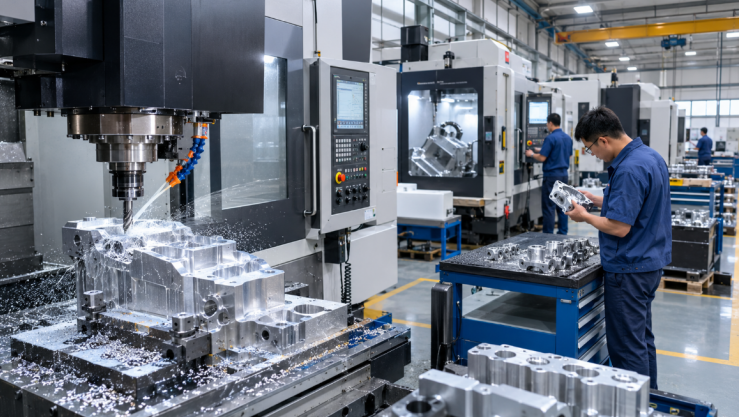
Most fabrication quotes roll up the same lines: raw material, machine or press time, setup and programming, tooling where needed, secondary operations such as finishing and inspection, packaging and freight, and the supplier’s overhead and margin. Knowing these lines helps you see why two shops quote differently for the same drawing, and where you can act.
Material and machine time are the largest lines on most parts. Tooling is a one-time hit that only appears for casting and stamping. Secondary operations and inspection scale with complexity. When you compare quotes, ask which lines differ and why, because that is where the real saving sits.
2. Material Cost Drivers
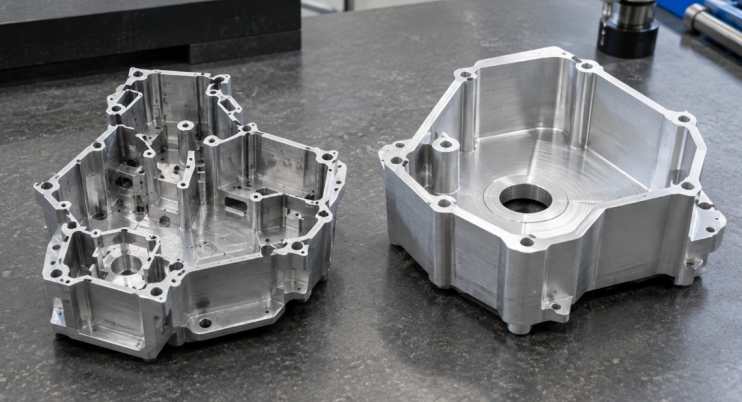
Material grade swings cost more than most buyers expect, and form matters too: a near-net shape from casting wastes less stock than milling a solid block down to size. The table groups common families by cost tier so you can see the lever before you specify an alloy.
| Material family | Cost tier | Note |
|---|---|---|
| Carbon steel, common aluminum | Economical | Default for most structural parts |
| Stainless, brass, copper | Mid | Corrosion or conductivity needs |
| Titanium, magnesium | Premium | Strength-to-weight or light weight |
| Engineering plastics | Varies | Each has its own pricing |
Goldconn stocks a broad list from aluminum and stainless to titanium and engineering plastics, which keeps sourcing stable and avoids a rare-alloy premium. For supplier trade-offs, see our guide on choosing a custom metal fabrication supplier.
3. Process Cost Curves
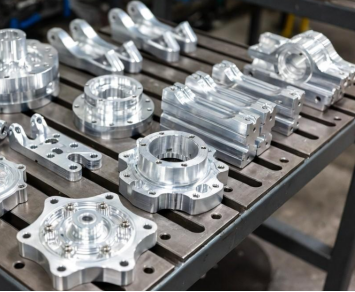
Process choice is the biggest lever on unit cost. CNC has no tooling, so each part carries its full machine time but the start cost is low and design changes are free. Die casting and stamping add a one-time tooling cost but drop the per-part cost as the run grows; for these, first articles typically take 4 to 8 weeks while the tool is built. Laser cutting sits between them for sheet parts, with simple pieces sampled in days.
| Process | Tooling | Best volume | First article lead time |
|---|---|---|---|
| CNC machining | None | Low to mid, fast changes | Fast, no tool to build |
| Die casting | One-time tool | High volume | Typically 4 to 8 weeks |
| Stamping | One-time tool | High volume | Typically 4 to 8 weeks |
| Laser cutting | None | Sheet parts, any volume | Simple parts in days |
4. Tolerance and Finish Cost
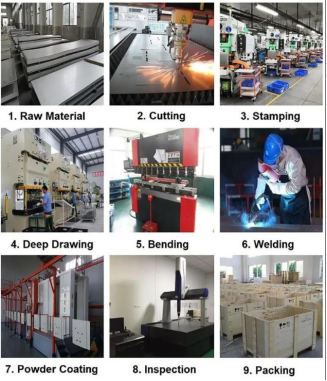
Tighter tolerance raises cost because it needs slower passes and more inspection. Goldconn holds about plus or minus 0.01 mm on key CNC features, plus or minus 0.05 mm on die-cast and stamped key features, and plus or minus 0.1 mm on laser-cut parts, so spec only what your function truly needs. Surface finish and coating add steps too; pick a finish you can actually source and that the part earns.
5. The Volume Effect
Volume spreads fixed costs across more parts. A process with tooling costs more to start but gets cheaper per part as the run grows, while CNC stays flexible from one part up. This is why the right process flips as your annual volume rises, and why the same part can have two very different “best” answers at prototype versus production scale.
6. Unit Price vs Total Cost of Ownership
The cheapest unit price is not always the cheapest program. Rework, scrap, late delivery, and field failure all add cost after the part ships. A supplier with a certified system and tight process control can cost a little more per part yet save more overall by protecting your schedule and warranty.
| View | What it counts | Risk if ignored |
|---|---|---|
| Unit price | Price per part only | Hidden rework and scrap |
| Total cost of ownership | Part plus quality, delivery, warranty | Misses savings from reliability |
7. How DFM Lowers Cost
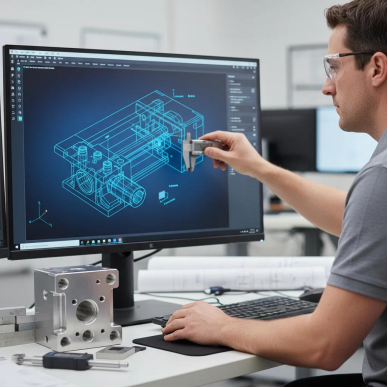
Most savings come from design, not negotiation. Widen tolerances to the minimum your part needs, keep wall thickness uniform, avoid features that need extra setups, and pick a process that matches your volume. Many of these moves are covered in our top 10 metal fabrication DFM tips. Fewer secondary operations and a finish you can actually source also trim cost.
8. Getting an Accurate Quote
The fastest way to a real number is a DFM review before you build. Share your drawings, material, volume, and tolerance needs, and the shop returns a priced path with the cheapest capable process. Goldconn offers this as a free review with a quote within 24 hours across its metal manufacturing services.
Frequently Asked Questions
- Why will no supplier quote a number from a photo? Cost depends on material, tolerance, volume, and finish, none of which a photo shows. A drawing is needed for a real quote.
- Is CNC or die casting cheaper? It depends on volume. CNC has no tooling and suits low runs; die casting costs more to start but drops per part at volume.
- Do tighter tolerances always cost more? Usually yes, because they need slower cuts and more inspection. Spec the widest tolerance your function allows.
- How do I get the lowest unit price? Match the process to volume, widen tolerances, and simplify features, then review the design with the shop before tooling.
- Should I compare unit price alone? No. Rework, scrap, and delivery risk add cost after shipping, so weigh total program cost.
- Does material choice matter that much? Yes. Specialty alloys cost more than common aluminum or carbon steel, and near-net casting wastes less stock.
- How long does tooling take? For casting or stamping, first articles typically take 4 to 8 weeks while the tool is built.
- How fast can I get a quote? Goldconn returns a free DFM review and a quote within 24 hours of receiving your requirements.
Request a Free DFM Review
Want a real number instead of a guess? Send Goldconn your drawings and volume. You get a free DFM review and a quote within 24 hours, with the cheapest capable process mapped for your part.