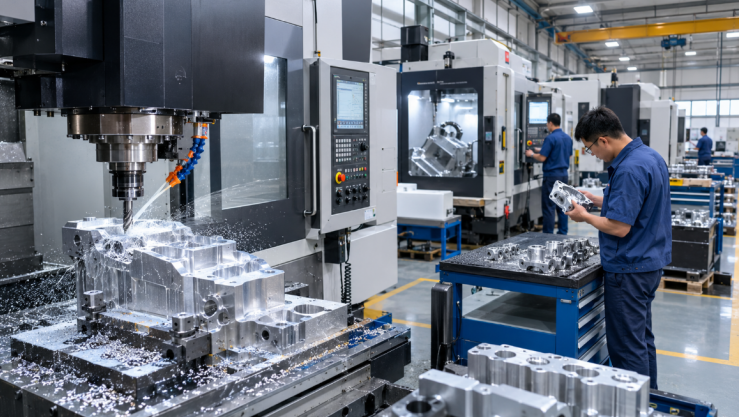
Design for manufacturability, or DFM, means shaping a part so it is cheap and fast to make without hurting function. Good DFM catches cost and delay before tooling, not after, when changes are expensive. These ten tips apply across CNC, casting, stamping, and laser work at Goldconn, part of its metal manufacturing services.
- 1. Why DFM Matters
- 2. Top 10 Metal Fabrication DFM Tips
- 3. Process-Specific DFM Rules
- 4. Tolerance Stack-Up and How to Avoid It
- 5. What a DFM Review Covers
- 6. How Goldconn Runs a DFM Review
1. Why DFM Matters in Metal Fabrication
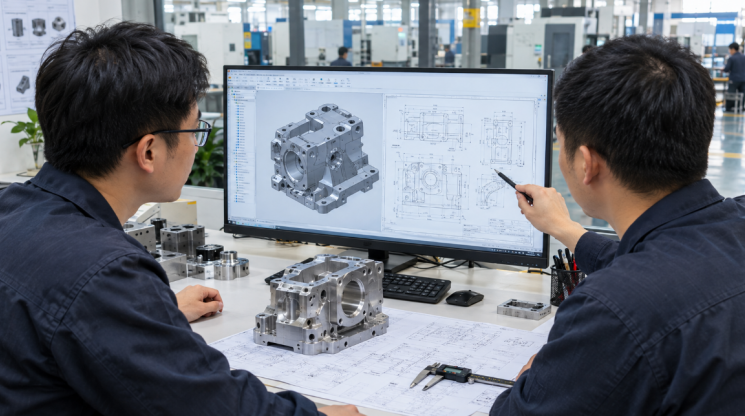
A part that is hard to machine or cast costs more in time, scrap, and rework, and it ships later. DFM closes that gap by matching the design to the process before metal moves. For a cost view, see our guide on custom metal fabrication cost. The earlier you review, the more you save, because every change after tooling carries the cost of the tool itself.
DFM is not about downgrading the part. It is about removing cost that adds no function, so the part still meets its spec but costs less to make. A buyer who skips DFM often pays for features no one asked for, then pays again to fix them.
2. Top 10 Metal Fabrication DFM Tips
2.1 Match the Process to the Part
Use CNC for low volume and fast changes; use die casting or stamping for high volume where tooling pays back. Goldconn runs both, so the review can pick without bias. A part forced into the wrong process pays for it in every unit, which is why process fit is the first thing the DFM review checks.
2.2 Keep Walls and Sections Uniform
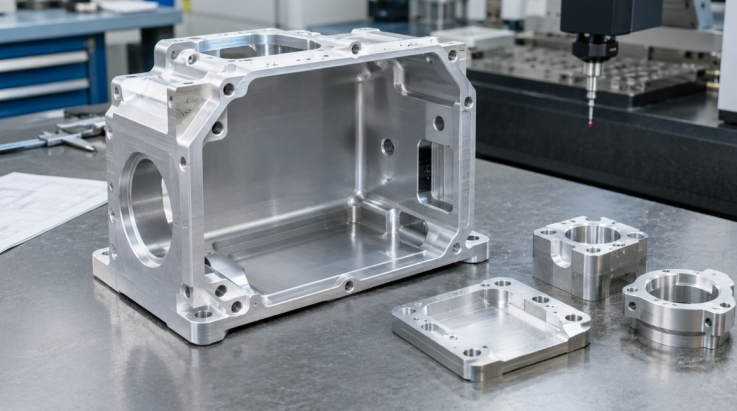
Even thickness avoids warping and sink, and it is easier to hold across a run. A part with thin and thick sections next to each other invites shrinkage defects in casting and chatter in machining, so uniform sections keep both processes stable and predictable.
2.3 Add Draft to Cast and Molded Parts
A release angle lets the part leave the tool cleanly and protects the tool. Without draft, ejection scrapes the surface or sticks the part, raising scrap and cycle time. The DFM review sets the minimum draft that keeps ejection clean for your material and tool.
2.4 Spec the Widest Tolerance You Can
Goldconn holds about plus or minus 0.01 mm on CNC and plus or minus 0.05 mm on cast or stamped key features, so only call out what your function needs. Every tighter digit costs machine time and inspection, and over-specifying also slows every supplier you ask to quote.
2.5 Use Standard Hole Sizes and Depths
Common sizes cut tool changes and setup time. A non-standard hole may need a special drill or a second operation that a standard size would skip, so standardize holes wherever the design allows it without hurting function.
2.6 Favor Larger Fillets and Corner Radii
Bigger radii lower machining time and tool wear. Sharp internal corners force a tiny tool to multiple passes, slowing the cut and shortening tool life, so generous radii are a quiet but real cost lever on machined parts.
2.7 Limit Secondary Operations
Combine features in the base process instead of adding separate steps. Each extra handling, fixture, or vendor hand-off adds cost and a chance for error, so the DFM review looks for features that could move into the primary operation.
2.8 Choose Materials You Can Source and Finish
Goldconn stocks aluminum, stainless, carbon steel, copper, titanium, and more, so pick within a proven supply. A rare alloy may stall delivery or push finish costs up, and a hard-to-finish material can add a process you did not budget for.
2.9 Design Flat Mating Faces
Flat surfaces seal and assemble better and need less post-work. Curved or stepped mating faces often demand extra machining or gaskets to close gaps, so flat faces are a simple way to cut both cost and assembly risk.
2.10 Share Drawings Early
A DFM review before tooling prevents the costly changes that come after. The sooner the shop sees the design, the more options it has to save you money, because early sketches still let you move features that a frozen model would lock in.
3. Process-Specific DFM Rules
Each process has its own rules, and a tip that helps one can hurt another. The table below maps the main processes to their key DFM rule and the mistake Goldconn most often flags, so you can self-check before the review.
| Process | Key DFM rule | Common mistake to avoid |
| CNC machining | Keep features reachable by the tool; favor standard tools | Deep pockets or internal corners needing tiny tools |
| Die casting | Uniform walls, draft on every face, sensible parting line | Thick-thin sections that shrink unevenly |
| Stamping | Generous bend radii, avoid re-entrant shapes | Sharp bends that crack or need extra ops |
| Laser cutting | Open profiles, tight tolerance only where needed | Over-tight call on a thin sheet edge |
4. Tolerance Stack-Up and How to Avoid It
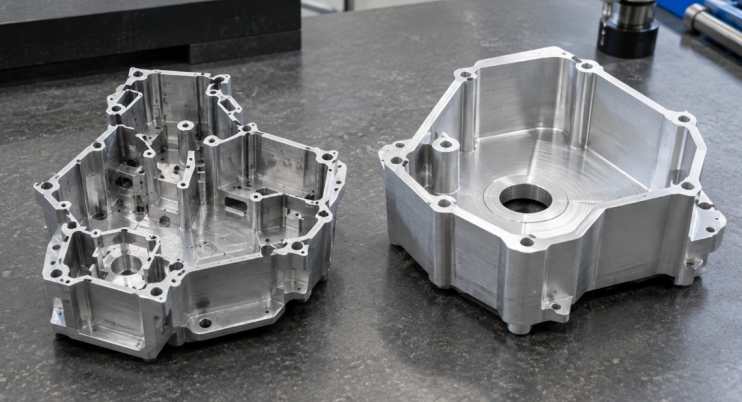
Tight tolerances on many features add up across an assembly. If three parts each sit within plus or minus 0.1 mm of their nominal, the gap between them can drift by much more than any single part shows. The fix is to tie dimensions to a common datum and let the shop hold relation between features through GD&T rather than stacking single-size calls.
| Approach | What happens | Result |
| Each feature toleranced alone | Tolerances add across the chain | Assembly gaps drift, fit fails |
| Dimensions tied to a datum | Relation held as a group | Function met with wider calls |
| GD&T true-position | Pattern located to datums | Best balance of cost and fit |
5. What a DFM Review Covers
| Area | What the review checks |
| Process fit | Is CNC, casting, stamping, or laser the cheapest capable path? |
| Geometry | Reachable features, wall uniformity, draft, radii |
| Tolerance | Over-specified calls, stack-up risk, datum use |
| Material | Stocked alloy, finish availability, machinability |
| Cost drivers | Secondary ops, setups, scrap risk |
6. How Goldconn Runs a DFM Review
Goldconn reviews your drawings against the target process, flags features that raise cost or risk, and proposes the cheapest capable path. For supplier selection, our guide on choosing a custom metal fabrication supplier explains what to weigh. The review is free and returned with a quote within 24 hours, tied to the full custom metal fabrication services program.
Frequently Asked Questions
- When should DFM start? As early as the first drawing. Changes are cheapest before tooling.
- Does DFM lower quality? No. It removes cost that adds no function, so the part still meets its spec.
- Can DFM change my process choice? Often. A small redesign can move a part from casting to CNC or vice versa, saving cost at your volume.
- Is the review free? Yes. Goldconn returns a free DFM review with a quote within 24 hours.
- Do these tips fit all processes? Mostly. They cover CNC, casting, stamping, and laser work, with process-specific notes where it matters.
- What is tolerance stack-up? It is when tight tolerances on many features add up across an assembly; tying dims to a datum avoids over-specifying.
- How much draft do I need? It depends on the material and tool; the DFM review sets the minimum that keeps ejection clean.
- Can you review before I finish the model? Yes. Early sketches catch the biggest savings; a complete model refines them.
Request a Free DFM Review
Send Goldconn your drawings and target volume. You get a free DFM review and a quote within 24 hours, with the ten tips above applied to your specific part. Explore the full custom metal fabrication services program.